Showing posts with label backpacking. Show all posts

Wednesday, March 12, 2014

Foraging for Edibles

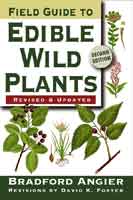
I just added an example of an edibles guide on my pinterest Michael Asimos Camping board. Understanding what mushrooms, berries, leaves, bark, etc that are safe can keep you alive in an emergency. That aside, I enjoy cooking with fresh ingredients that I find while on my outings.

The time to educate yourself on what plants in your areas are safe and what aren't isn't when you're starving after dark. Take the time to learn about indigenous plants and mushrooms that are specific to your geographic region before you need to. There are plenty of resources online and at the library, and a small field manual isn't a bad idea either.

I have a small emergency sheet that's laminated that goes inside my backpack.

If you plan your camping trip in areas that you know are abundant with edibles, you can pack less and use it fresh when you get there.

One word of advice -- don't eat anything that you can not identify 100%. If there is an extra band on the stalk or the leaf is "almost" identical, it isn't worth the risk.

Once you become familiar with the wild plants that are available in your area, you will feel more confident lightening your pack and it's a lot of fun to share your knowledge with other people who are hesitant or haven't been exposed to foraging before.

And if you ever come across a cache of Huckleberries --- let me know!

- Mike


Monday, October 21, 2013

Travel Towels - Get One

Maybe I am the only one who has seen a sham wow commercial and wanted one for camping, but they are heavy. I have invested in some REI multitowels and gotten way more than my money's worth out of them. The 36X16.5" is 4.3oz. I also got a PackTowl Ultralight which is only 1.8oz for the 36X20.


The REI multitowel feels more like a shamwow would - it's soft and absorbent, vs the PackTowl which is more like a squeegee on my skin. That said, the PackTowl dries much faster hanging from a tree branch or across my tent or even hanging from the corner of a bunkbed in a hostel!

Travel towels are an important part of my hiking and camping pack for several reasons. Listed below are just a few:
1. While couch surfing you don't need to dirty someone else's towels for a shower or quick rinse
2. If you come across a stream/lake/river on the trail you can dry quickly
3. Most campgrounds don't have towels
4. You can dry yourself and gear off before settling into your tent
5. If it is long enough you can use it to secure bulky gear atop your pack
6. It can double as a pillow
7. With a quick swipe of your knife you have tourniquet strips

I tend to go light and take the Ultralight with me and I have just the large, not the XL or XXL.

Travel towels vary in cost but a good one will last you several years and many adventures (if you're livin right!)

I also posted on my other blog about hang drums. I suppose that a travel towel large enough could provide some travel cushion for the drum.

Tuesday, August 27, 2013

Mike Asimos : Preparing Dehydrated Foods for Camping

When you're focused on planning a backpacking trip, a few things usually take priority - namely your tent and sleeping bag requirements, trail maps, first aid and food. Unlike car camping, food weight, ease of cooking and taste all play a factor, as does cost. Some meals can be so expensive and others are cheap and taste awful. I have used a dehydrator in the past with good results and wanted to pass on some tips to you.

The benefits of dehydrating your own food are control over ingredients and freshness factor. Overall, if you buy your items in bulk or use items you already have in bulk in your pantry it can also be more cost effective. It requires no refrigeration once it has been dehydrated and the weight is minimal.

The best fruits to dehydrate are bananas, apples, strawberries, peaches, cherries, pineapple, mangoes and blueberries.

The best vegetables to dehydrate are corn, peas, green beans, onions, mushrooms, carrots and broccoli.

There are plenty of other resources for meats, as I have very little experience with it mostly cause I'm afraid of getting sick, but I know that beef and turkey are supposedly easy.

Every item has its own levels of water and therefore need different amounts of time in the dehydrator but I have never seen a dehydrator that didn't have instructions for different foods.

Things to remember:
Cut the food items into small bite sized pieces.
Lay the items next to one another in a layer, but not touching while dehydrating
Place dried items into bags/containers that will allow you to remove all air from them.

I personally use Ziploc bags and press the air out. I also dehydrate shortly before my trip is happening. Then I bring one Tupperware to mix/rehydrate everything in and am able to reuse the Ziploc bags next time.


Monday, August 5, 2013

Vegetarian Camp Cooking

Grateful Cead Black Bean Burger
Grateful Dead Black Bean Burgers

I found this article about Grateful Dead Black Bean Burgers at the Tupelo Honey cafe, and it inspired me to both share and comment on vegetarian camping foods.
Most people associate camping with a lot of meat (what about the hot dogs, Mike!!) but in fact I have had great success with vegetarian cooking in terms of flavor and not having to worry about food storage bacteria problems. Many freeze dried foods these days are vegetarian and fruits and veggies will often stay fine in your pack without needing ice.

REI has some pasta and beans kits that just need a flash of rehydration and they don't weigh as much as something already cooked in sauce and a tin can will.

The recipe above could be modified just a bit, pre-formed in a wax paper or aluminum casing and heated up once you get your camp fire going for a nutritious and filling meal.

Head over to the article above for the full scoop, or shortcut here. If you repost, please give credit via the site linked above!

Grateful Dead Black Bean Burger 
  • 1 tablespoon olive oil
  • ½ cup peeled, shredded carrots
  • ½ corn, frozen, or cut from 1 large ear
  • ½ cup diced roasted red bell pepper
  • ½ diced poblano chili
  • ½ cup diced Vidalia onion
  • ½ cup diced celery
  • 1 tablespoon chopped garlic
  • 1 cup firm tofu
  • 2 (15-ounce) cans black beans, drained and rinsed
  • 1 tablespoon minced fresh cilantro
  • Juice of ½ a lime
  • 1 ½ teaspoons ground cumin
  • 1 tablespoon chili powder
  • ½ teaspoon sea salt
  • ¼ teaspoon freshly ground black pepper
  • 1 teaspoon hot pepper sauce
  • 2 cups panko bread crumbs
  • 2 cups canola oil
  • 8 artisanal hamburger buns
  • lettuce and avocado for serving (optional-not in original recipe)
  • Cilantro Lime Mayonnaise (recipe follows)
  1. Heat the olive oil in a large skillet over high heat. Add the carrots, corn, bell pepper, poblano, onion, celery, and garlic. Saute for about 5 minutes, stirring often to make sure the garlic does not burn. If it starts to, turn the heat down some. Remove pan from heat and let veggies cool for 10 minutes.
  2. Place tofu in a food processor and puree until smooth. Place in a large bowl.
  3. In a medium bowl, combine beans, cilantro, lime juice, cumin, chili powder, salt, pepper, and hot sauce. Place 2 cups of bean mixture at a time in the food processor and pulse until coarsely chopped. Once coarsely chopped, place in the large bowl with tofu.
  4. Add panko crumbs to the large bowl and mix the tofu, bean mixture, and panko crumbs together. Form into 8 patties.
  5. Heat Canola oil in a heavy bottomed skillet on high heat until oil begins to bubble. Put patties in oil and cook about 5 minutes per side, until outside is crispy.
  6. Serve on rolls with mayonnaise.
Cilantro Lime Mayonnaise
  • 6 tablespoons mayonnaise
  • 2 tablespoons freshly squeezed lime juice
  • 2 tablespoons minced fresh cilantro
  • 1/8 teaspoon sea salt
  • 1/8 teaspoon freshly ground black pepper
  1. Mix all ingredients together in a small bowl.

Thursday, February 14, 2013

Wilderness Survival

I am going to keep my political views on the Dorner case to myself. I did, however spend time thinking about wilderness survival when I realized he had probably retreated into the Big Bear wilderness.

I have a copy of an old military field manual (21-76) which focuses on wilderness survival and escape. Even though it adds to the weight of my hiking pack, I can't imagine another instance of a time where I may need it more than when I'm alone on a wilderness trek.

The pages which focus on how to get fresh water using condensation and how to build simple lean-to's, and how to tell which way storms typically blow based on the condition of the branches have long ago lost their crispness because I'm not sure that I'll be in the mood for reading on the basics if faced with an emergency.

 I have read "into the wild" and other books of that nature, but I struggle to think of a book that has so much vital information crammed into it.

Does anyone else know of any survival manuals that they don't like leaving home without?

-- Mike

Monday, January 28, 2013

Best day packs for shows and camping?

Flash 18 Pack - Mike Asimos
I know that day packs range from $30 to $300, depending on all of the features. I like to check our REI when they have outlet sales (or whenever I can make it up in the Charlotte area) and I have gotten some nice packs. I have an older military rucksack too. Some of them have water bladders and others don't. I have noticed that if the straps aren't padded enough and I'm carrying water bottles, other heavy items, I feel some real shoulder strain as the day goes on. This is the case with my Flash 18 pack.

I struggle with breathable material vs waterproof. Smells, spills, etc all seem to happen during the most inconvenient times.

Do you have a favorite pack? -- Mike

Monday, January 14, 2013

Show Tripping Weekend Packing List

I always camp when travelling for a show and the opportunity presents itself as an option. Gimme that sweet quiet away from the energy and noise of the crowds. When I've reached my limit of action and interactions I want to lay my head in the grass and think about the experience and rest and relax under the trees the way we're meant to be.

Since there aren't many shows in SC, usually have to pack something that will fit in the community car without taking too much space but still have what I need. Below is what I usually pack to get me through a weekend, not including what I'm wearing the day I leave.

Mike's Show Trip Weekend (Car Camping with the option to separate if the wind blows me)

Flip Flops
Bandana
Small first aid kit
2 shirts
1 change of pants
1 change of underwear
1 change of socks
Camel back water bladder
1 package beef jerky
1 ultralight tent
1 ultrawarm sleeping bag
1 headlamp
1 gigastove
1 mess / cooking kit
4 freeze dried meals

I've been researching small solar chargers for my phone but I am not yet sure the trust is there to warrant the expense.